
Protecting Your Home: Preventing Winter Attic Condensation and Roof Rot
When winter rolls into Tulsa, bringing its trademark mix of freezing temperatures and icy winds, most homeowners understandably focus their attention on staying warm indoors. You might check your furnace, seal up drafty windows, and make sure your pipes are protected. However, one of the most critical areas of your home often goes entirely unnoticed during the colder months: your attic.
While you are keeping your living space cozy and warm, a silent battle could be taking place right beneath your shingles. The dramatic temperature fluctuations we experience in Oklahoma can create the perfect storm for moisture problems, specifically winter attic condensation and moisture buildup. If left unchecked, this hidden moisture can lead to serious structural issues, eventually rotting away the very wood that holds your roof together.
At Sacred Ground Properties, our core philosophy is bringing certainty into a world of uncertainty. We know that unpredictable weather can disrupt your peace of mind and put stress on your property. That is why we want to pull back the curtain on this common cold-weather problem. Understanding how condensation forms, recognizing the early warning signs, and ensuring your home is equipped to breathe properly can save you from facing a massive headache come spring.
The Science of Winter Condensation
To understand why condensation happens, we have to look at how air behaves. Throughout the winter, you are generating warm, moist air inside your home. Cooking, showering, doing laundry, and even simply breathing all release moisture into the indoor environment. Because warm air naturally rises, this humid air drifts upward through your ceilings and into your attic space.
During a cold snap in Green Country, the underside of your roof deck—the wooden boards directly beneath your shingles—gets incredibly cold. When the warm, moist air from your living space hits that freezing cold wood, it undergoes a rapid temperature drop. The air can no longer hold onto its moisture, which then turns into water droplets or even frost on the underside of your roof deck.
This is exactly the same process that causes your bathroom mirror to fog up when you take a hot shower, or water droplets to form on the outside of a cold glass of iced tea in the summer. In your attic, however, it is a recipe for disaster.
Signs of Inadequate Roof Attic Ventilation in Winter
Catching this problem early is crucial to preventing long-term damage. Unfortunately, because most of us rarely spend time in our attics during the winter, the signs of inadequate roof attic ventilation in winter can easily go unnoticed until they become severe. Here are a few things to look out for:
- Frost on Roofing Nails: If you pop your head into the attic on a particularly cold morning and shine a flashlight at the roof deck, look at the tips of the nails poking through the wood. If they look white or icy, you have a condensation problem. When the weather warms up, that frost will melt and drip onto your insulation.
- Damp or Compressed Insulation: Insulation is meant to be fluffy, trapping pockets of air to keep your home warm. If it gets repeatedly dripped on by melting attic condensation, it becomes matted and damp. Not only does this ruin its insulating value (costing you more in heating bills), but it also creates a breeding ground for mildew.
- Water Stains on Ceilings: Often confused with a leaky roof, water stains on your bedroom or hallway ceilings during the winter might actually be melted condensation dripping down from the attic above.
- Mold and Mildew Smell: A musty odor in your home, particularly in the rooms directly beneath the attic, is a strong indicator of trapped moisture and poor air circulation.
How Poor Attic Venting Causes Roof Deck Rot
If the moisture problem is ignored, it sets a destructive chain of events into motion. This brings us to the core issue: how poor attic venting causes roof deck rot.
Wood is a porous material. When the wooden decking of your roof is constantly exposed to moisture from winter condensation, it begins to soften. Mold and wood-rot fungi thrive in dark, damp environments. Over a surprisingly short period, these fungi break down the structural integrity of the wood.
Eventually, the decking can become so compromised that it is no longer capable of securely holding your shingles in place. When high winds tear through our region, those loosely anchored shingles are much more likely to blow off. Furthermore, a rotted roof deck is a serious safety hazard and complicates future roofing projects. If you need a roof replacement, a severely rotted deck cannot simply be shingled over; the damaged wood must be entirely torn out and replaced, significantly adding to your residential roofing project costs.
In a market where supply chain delays and fluctuating material costs are a real concern, avoiding unnecessary structural repairs is one of the best ways to protect your wallet.
The Solution: Balancing Intake and Exhaust
The most effective way to combat winter condensation is to ensure your home has a properly balanced ventilation system. The goal is to create a continuous flow of air that sweeps moisture out of the attic before it has a chance to settle and freeze.
Proper attic venting relies on two main components working together:
- Intake Ventilation: These are typically located at the lowest point of your roof, usually in the soffits (the underside of your roof overhang). They allow fresh, cold air from the outside to enter the attic space.
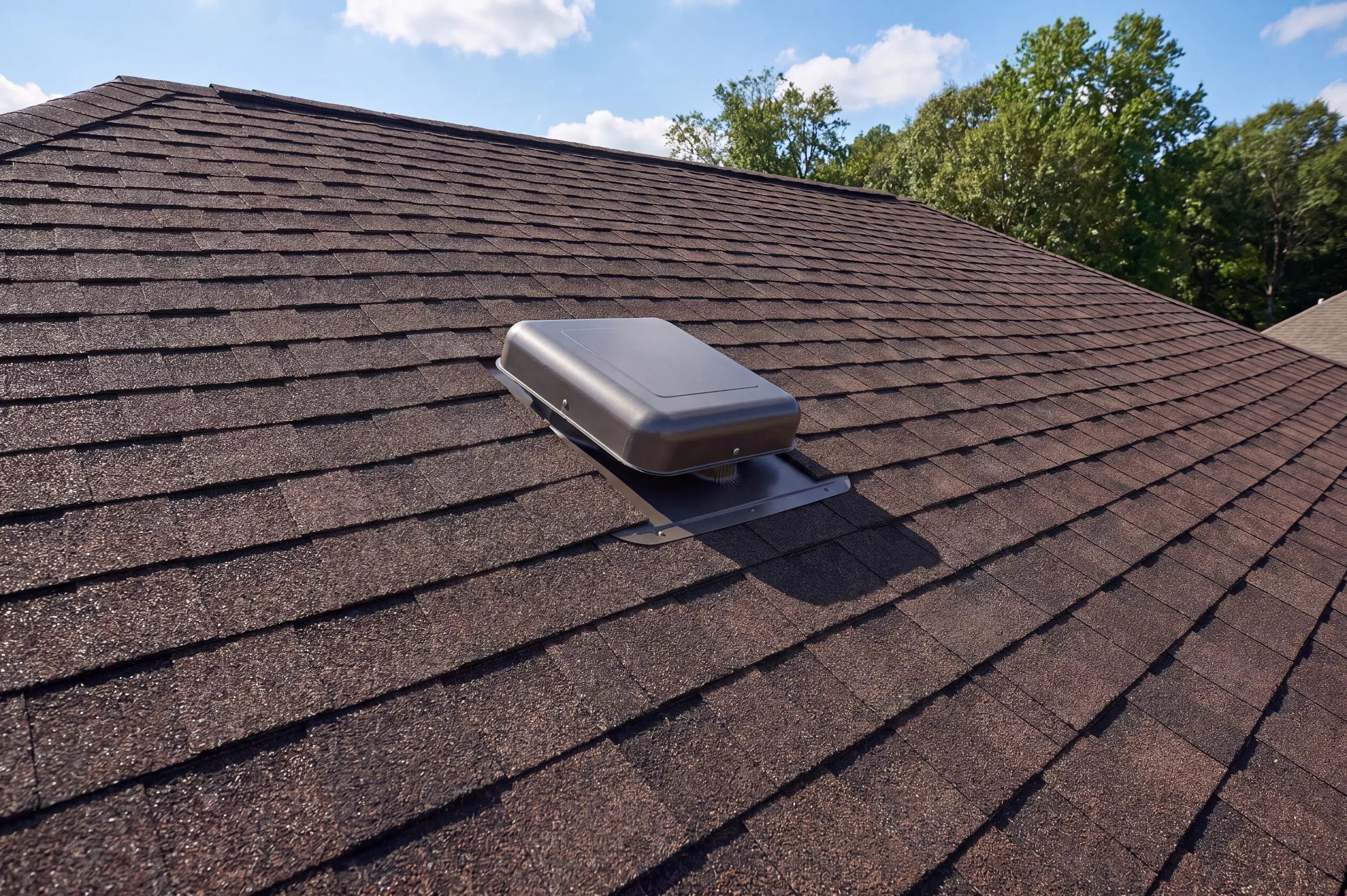
- Exhaust Ventilation: These are positioned at or near the highest point of your roof, such as ridge vents running along the peak. As the warm, moist air naturally rises inside the attic, it is pushed out through these exhaust vents by the fresh air entering from below.
When intake and exhaust are properly balanced, your attic temperature stays closer to the outside temperature. This prevents the drastic temperature differential that causes condensation in the first place.
Today, we utilize modern drone inspections and advanced measurement tools to accurately assess your current ventilation setup. This technology allows us to pinpoint exactly where airflow is restricted without causing unnecessary disruption to your home.
Let Us Protect Your Home This Winter
Navigating home maintenance in the 918 can feel overwhelming, especially when trying to differentiate legitimate, local experts from out-of-state companies that disappear after the work is done. At Sacred Ground Properties, we are deeply committed to this community and stand behind our work with clear communication and transparent pricing.
If you are fixing to update your home or simply want the peace of mind that your roof is prepared for the remaining winter months, do not wait for the warning signs to become a costly structural repair. Reach out to our experienced team today for a comprehensive roof and attic inspection. We will evaluate your ventilation, identify any hidden moisture issues, and provide a clear, straightforward plan to keep your home healthy, dry, and protected for years to come.